Getting started · for tenants
Check-in with the EU Digital Identity (EUDI) Wallet
Guests confirm name, date of birth and nationality from their EU Digital Identity Wallet via myeudi.app instead of typing and uploading ID photos.
Good news: the EU Digital Identity Wallet is already supported. Guests who have an EUDI Wallet can complete the identity part of the online check-in in a few seconds — no typing, no photo of the passport. The data comes straight from the wallet and is marked as verified in your dashboard. The wallet connection is provided by myeudi.app together with phone.codeb.io.
What is the EUDI Wallet? #
Under the European Digital Identity Regulation every EU member state provides its citizens and residents with a digital identity wallet on their phone. It holds verified personal data (the "PID": name, date of birth, nationality and more) that the holder can share selectively with services — with their explicit consent each time.
How it works for the guest #
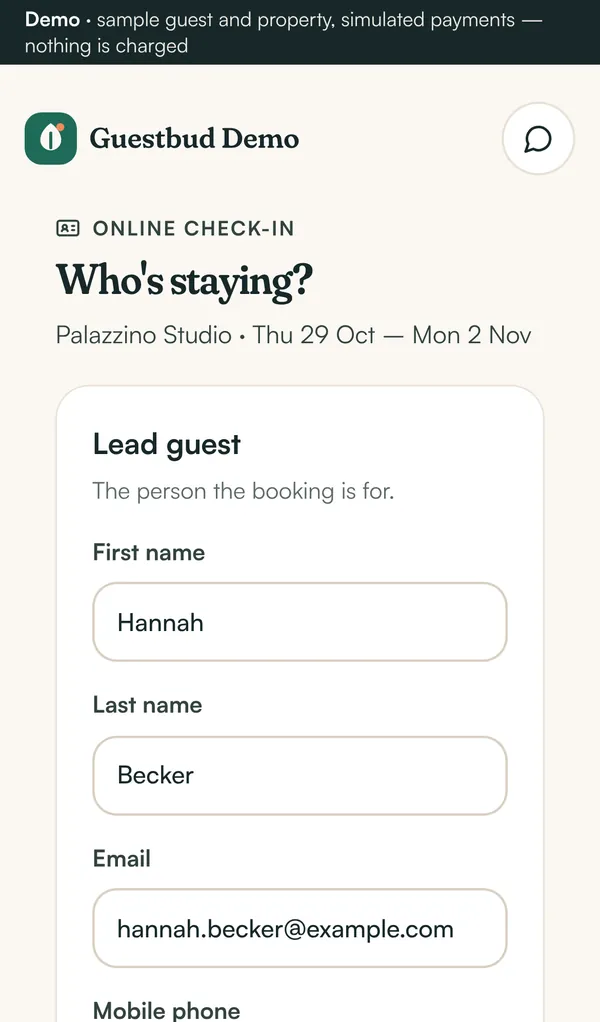
- In the online check-in form the guest taps Check in with the EUDI Wallet.
- They are taken to phone.codeb.io, which requests the identity data from their wallet — see myeudi.app for how the EUDI Wallet connection works.
- The guest approves the request in the wallet app.
- They come back to the portal: first name, last name, date of birth and nationality are filled in and marked verified. Address and document fields are filled in too when the wallet shares them.
- The guest completes the remaining fields (for example arrival time) and accepts the house rules.
The wallet is also offered as a document type under Travel document: choosing EU Digital Identity Wallet starts the same wallet check and keeps everything the guest already typed. After the wallet check the document number becomes optional, because the identity is verified by the wallet. For a German Meldeschein the wallet fills in the details, but the guest still chooses a passport or ID card and enters its number, as the registration law asks for one.
Guests without a wallet simply fill in the form as usual — nothing changes for them.
What you see as the host #
- The booking shows an EUDI wallet verified badge in the online check-in section.
- The activity log records Identity verified with EU Digital Identity Wallet with the time.
- For German properties the printed Meldeschein notes that the identity was confirmed with the EUDI Wallet.
Switching it on or off #
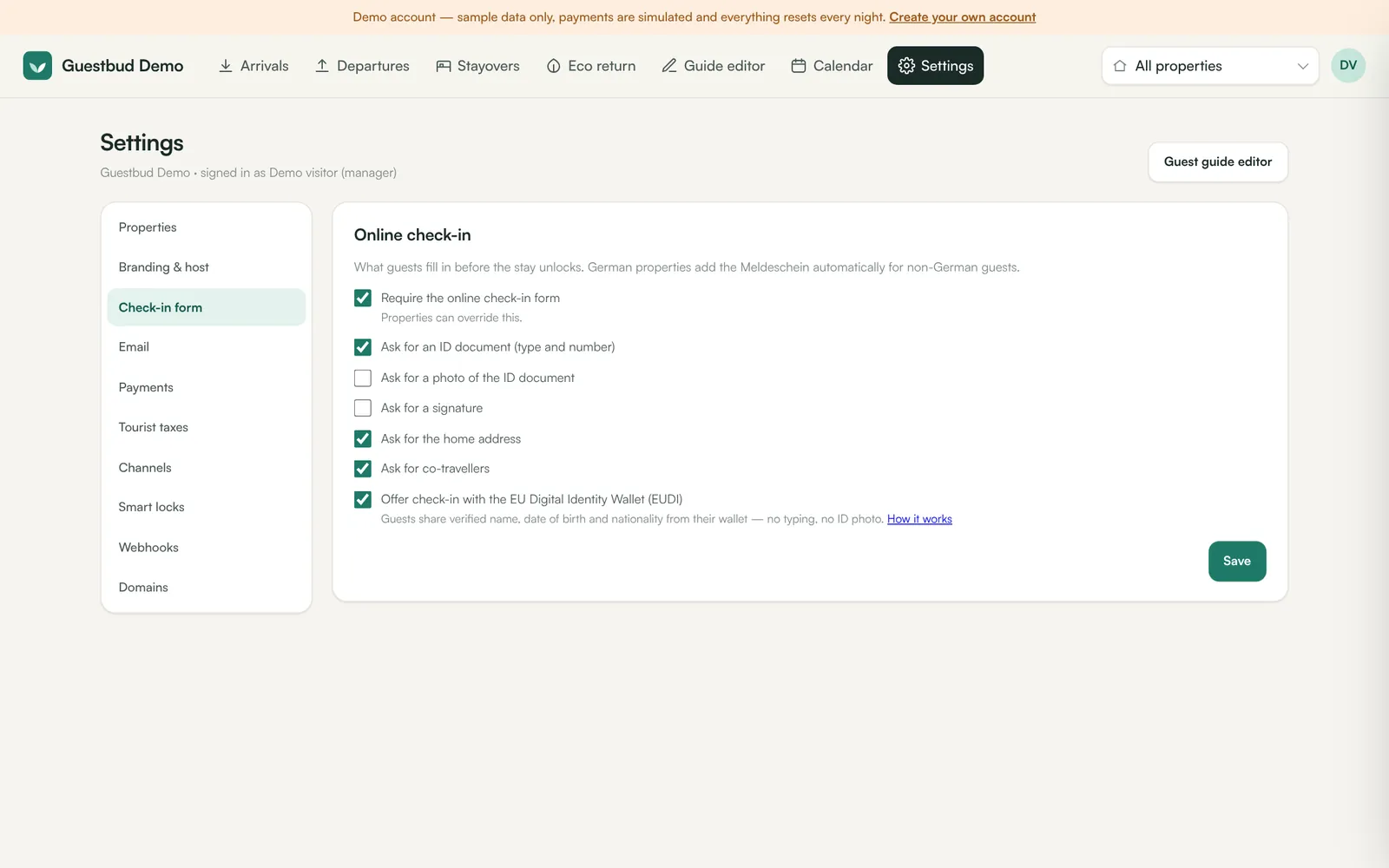
Settings → Check-in form → Offer check-in with the EU Digital Identity Wallet (EUDI). It is on by default whenever the platform operator has connected phone.codeb.io.
Privacy #
- Only the fields needed for check-in are requested: name, date of birth, nationality and — if available — address and document details.
- The guest sees exactly what is requested and must approve it in the wallet.
- The data is stored like any other check-in data: privately, per host, and deleted on the usual schedule.
Frequently asked questions #
Where can guests learn more about the EUDI Wallet? #
On myeudi.app.
Which countries' wallets work? #
Wallets that present the EU person identification data (PID) over OpenID for Verifiable Presentations, in either format the regulation allows (SD-JWT VC or mdoc). phone.codeb.io makes the request and checks the response; the guest portal only receives the result.
Member states are still rolling out their wallets, so which national wallets are in everyday use changes month by month — myeudi.app shows the current state. A guest whose wallet cannot answer the request, or who has none, simply completes the normal form; nothing is blocked.
What does "verified" mean here? #
The marked fields (name, date of birth, nationality, and address or document details when shared) came from the wallet's PID and were not typed by the guest. Other fields are what the guest entered.
Does the EUDI Wallet replace the Meldeschein signature in Germany? #
No. The identity data is filled in automatically, but German law still requires the guest's signature on the registration form, which the guest gives in the portal.
Does it cost anything? #
No extra cost for you or your guests.